Custom AI vs Off-the-Shelf AI: How to Decide
Reach for off-the-shelf AI (an API like the OpenAI or Anthropic models, or a vertical AI tool built for your use case) when the task is well-defined, your data isn't your defensible edge, and you need something working in weeks. Reach for custom AI development - your own retrieval pipeline, fine-tuning, or a purpose-built agent - when the task depends on your proprietary data, general models don't clear your accuracy bar, or the AI behavior itself is the product. Most real systems land somewhere in between: an off-the-shelf model as the reasoning engine, wrapped in custom retrieval, tools, and evaluation that you own.
What "off-the-shelf" actually means here
It's worth separating two things people lump together:
- Foundation model APIs. Calling GPT, Claude, or Gemini directly, with your own prompts and maybe some retrieval on top. This is "off-the-shelf" in the sense that you're not training a model, but the system around the API call can still be fully custom.
- Vertical AI products. A packaged tool built for a specific job - an AI writing assistant, a support-ticket triager, a meeting summarizer - where you configure rather than build.
Most of this guide is really about the first kind, since that's the actual decision most teams face: build your own layer around a foundation model API, or buy a packaged product that already does the job.
When off-the-shelf wins
- The task is common and well-understood. Summarization, drafting, classification, and general Q&A are things foundation models already do well. You're unlikely to beat a frontier model at generic writing quality with a smaller custom model.
- Your data isn't the differentiator. If the value is in the workflow around the AI, not in unique proprietary data the model needs to know, a general model with good prompting is usually enough.
- Speed matters more than control. An API call can be in production in days. A vertical product can be live even faster, sometimes in hours.
- You don't yet know if AI is worth investing in here. Prove the use case with the cheapest path first, then decide whether the economics justify building your own layer.
- You don't want to own model operations. Foundation model providers handle scaling, safety tuning, and model updates. That's real weight off your team.
When custom AI development wins
- Your data is the edge. If the value comes from grounding answers in your own documents, codebase, support history, or internal knowledge, you need retrieval built around your data, which is inherently custom work even if the underlying model is off-the-shelf.
- General models don't clear your accuracy bar. Some domains - specialized technical fields, unusual formats, tasks needing consistent structured output - benefit from fine-tuning, few-shot examples tuned to your data, or a narrower specialized model.
- You need agentic behavior with real tools. An agent that reads from and writes to your systems, calls internal APIs, and takes multi-step actions is architecture and engineering work no packaged product does for you out of the box. See how AI agents work and building your first AI agent for what that actually involves.
- Compliance or data residency rules constrain where data can go. Some industries need control over exactly where prompts, embeddings, and logs live, which packaged tools rarely offer in the way you need.
- The AI is your product. If customers are paying specifically for what your AI does, you need to own enough of the stack that a competitor can't replicate you by calling the same public API.
The real architecture question: build the layer, not the model
For the large majority of products, "custom AI" doesn't mean training a model from scratch. It means building the system around a foundation model API:
- Retrieval-augmented generation (RAG), so the model answers from your own data instead of only what it was trained on. See what RAG is and building a production RAG pipeline.
- A vector database to store and search your embedded data efficiently, covered in what vector databases are and how to choose one.
- Evaluation and observability, so you know when outputs are wrong before your users do. See LLM observability and how to set it up.
- Prompt design, which is underrated engineering work in its own right. See prompt engineering techniques that work.
This layer is what makes an AI feature actually reliable, and it's true custom development even though you never train a model. It's also where most of the cost and time actually goes: see what AI agent development costs for realistic numbers.
A decision checklist
Points toward off-the-shelf
- Is the task generic (writing, summarizing, classifying, answering FAQs)?
- Is speed to first version more important than defensibility right now?
- Is your data non-sensitive or not central to the answer quality?
- Are you still validating whether this use case is worth investing in?
Points toward custom
- Does the answer need to be grounded in your own proprietary data?
- Do you need the AI to take actions in your systems, not just respond?
- Have you already tested a general model and found the accuracy isn't good enough?
- Is AI quality itself the thing customers are paying for?
- Do you have compliance or data-residency requirements a public API can't satisfy?
A path that works for most teams
- Start with the API and a thin custom layer. Call a foundation model directly with well-designed prompts and, if needed, basic retrieval over your data. This tests the idea cheaply.
- Instrument it before you trust it. Track cost, latency, and output quality from day one so you have real data, not a demo impression, about whether it's working.
- Invest in the layer that matters. If retrieval quality is the bottleneck, invest there. If reliability under multi-step tasks is the bottleneck, invest in the agent architecture. Don't build everything at once.
- Only consider fine-tuning or a specialized model once prompting and retrieval have plateaued. It's the most expensive lever and rarely the first thing that's actually limiting you.
- Revisit the decision as usage grows. A system that made sense as an API call at 100 requests a day can justify more custom investment at 100,000.
If AI is going into an existing product
The decision above is usually made feature by feature, not once for the whole product. How to add AI to an existing SaaS product walks through picking the first feature and fitting it into an architecture you already have.
Bottom line
Off-the-shelf AI gets you moving fast on tasks a general model already handles well. Custom AI development earns its cost when your data, your accuracy requirements, or the AI behavior itself are what make your product different. In practice, most successful systems use an off-the-shelf model as the engine and build a custom layer of retrieval, tools, and evaluation around it - which is exactly where the real engineering work, and the real advantage, tends to live.
If you're weighing this for a specific feature, RMJDG builds both the AI layer and the surrounding product, and can help you figure out where the line should sit. You can reach out through the RMJDG site.
Services
Not sure where to start? Tell me what you want the product to do.
Related work
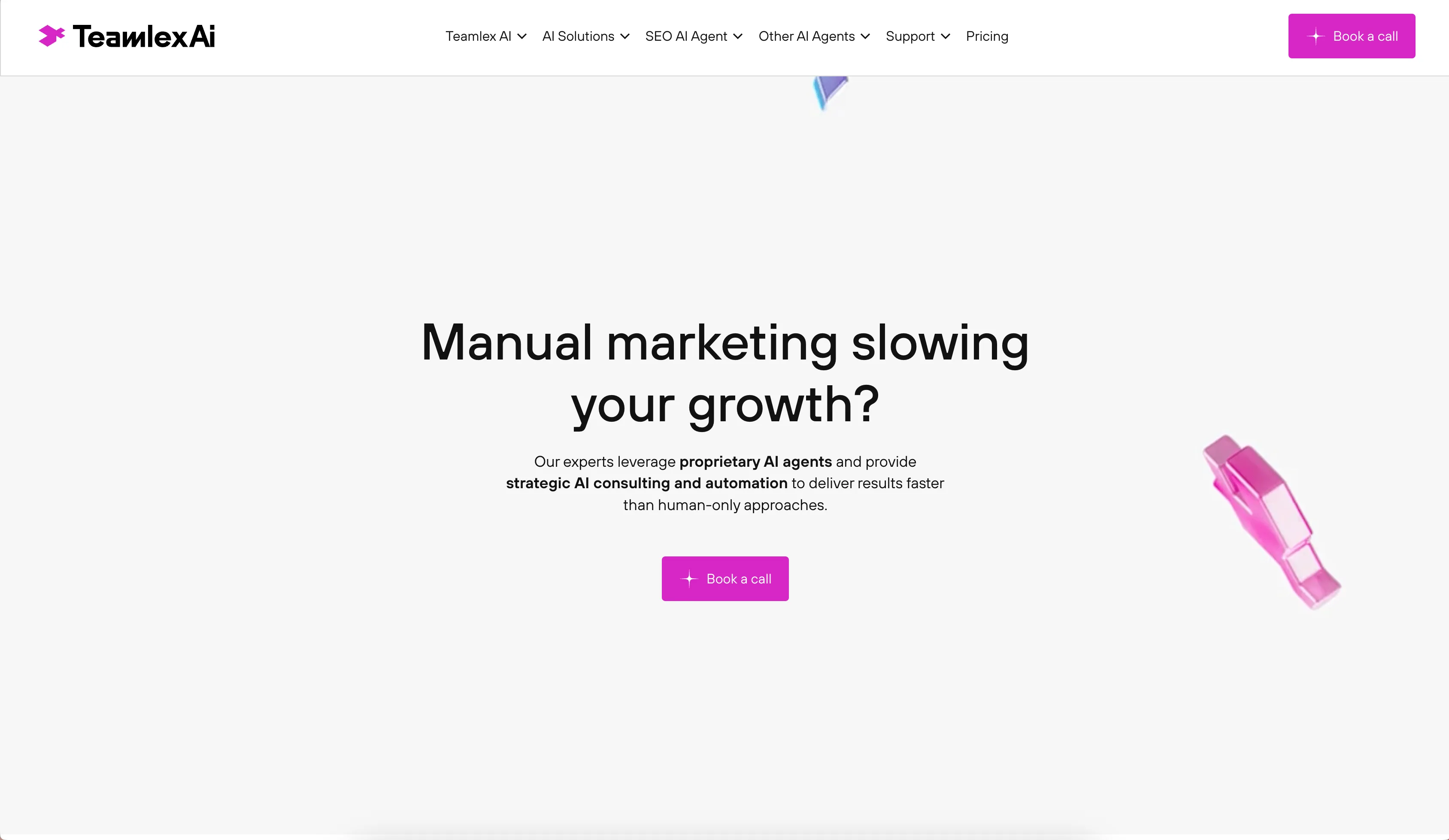
Teamlex AI: an AI SEO platform
An AI SEO platform for understanding search intent, analyzing competitors, and creating optimized content.
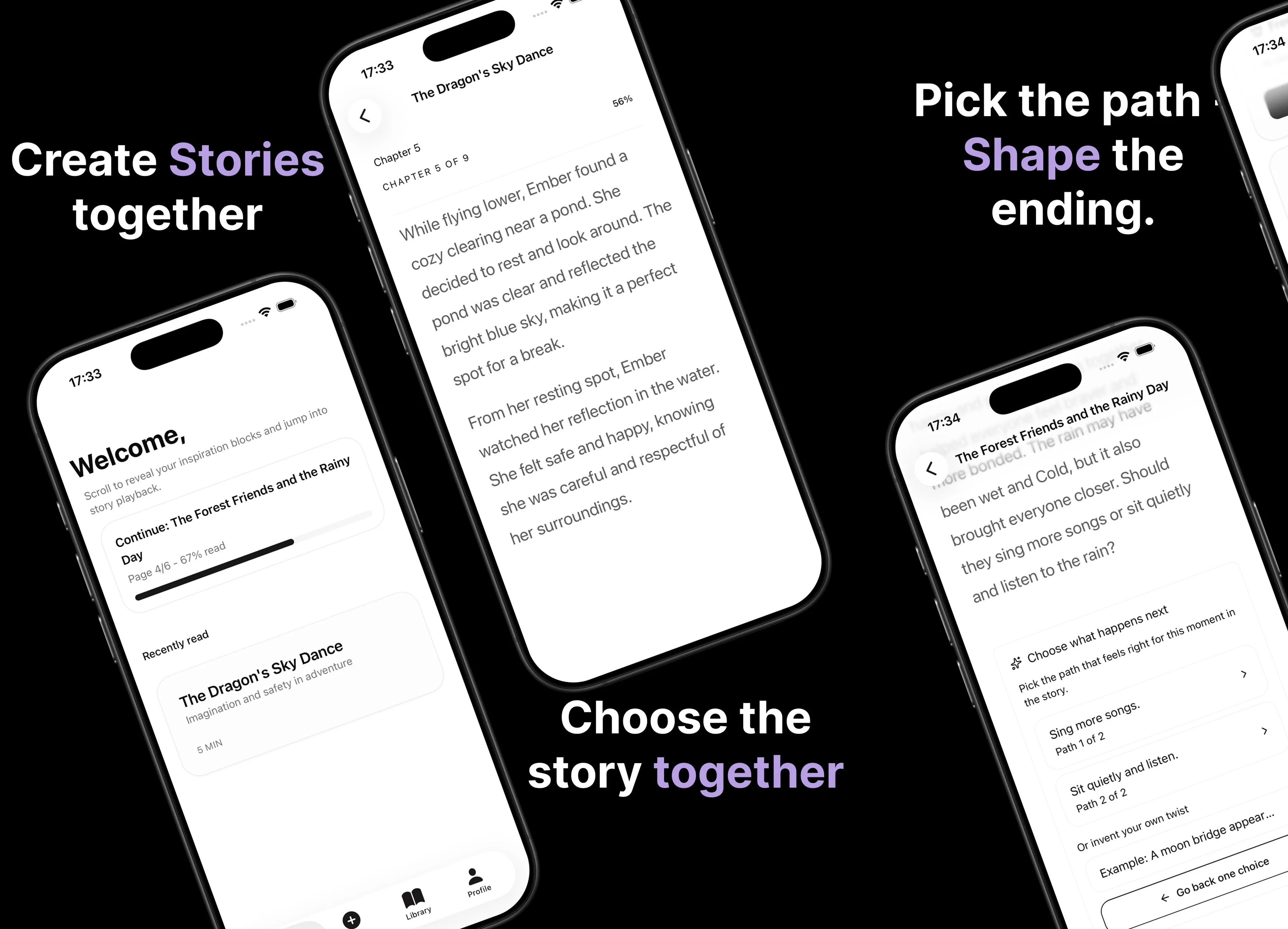
Parent AI Stories: personalized bedtime stories
A mobile product that helps parents create personalized bedtime stories for children in minutes.