MVP Development Company vs Freelancer: Which Should You Hire?
Hire a freelancer when the work is narrow, well defined, and mostly one skill, and when you or someone on your team can review the output technically. Hire a development company when the MVP needs several disciplines (design, backend, frontend, mobile, deployment), when continuity matters, and when you want someone accountable for the whole result rather than for one slice of it.
Neither choice is safer by default. Most failed MVP engagements come from a mismatch between the hire and the job, not from the type of hire. Here is how to tell which side of the line your project is on.
Freelancer vs development company at a glance
Cost. A freelancer usually has a lower hourly or project rate because there is no agency overhead. A company charges more per hour but often covers project management, QA, and design in that price. Compare the total cost of a working, deployed product, not the hourly rate. The MVP development cost breakdown shows how scope, not rate, tends to decide the final number.
Range of skills. One freelancer rarely covers product design, backend, frontend, mobile, DevOps, and QA at a senior level. A company can staff each role. Freelancers who claim to do everything are typically strong in one or two areas and adequate in the rest.
Speed. A skilled freelancer can move very fast on a contained task because there is no coordination overhead. On a larger build, a team can work in parallel, while a single person is limited by their own hours.
Continuity and risk. A freelancer is a single point of failure: illness, a competing project, or a change of plans can stall the work. A company can replace a person without stopping the project, though you should ask who that replacement would be.
Management effort. With a freelancer, you (or your technical lead) usually decide priorities, review code, and catch quality issues. A company normally brings its own project management and review process, so your time goes to product decisions instead.
Accountability. With a company there is one contract and one party responsible for delivery. When you assemble several freelancers, you become the integrator, and problems between their pieces belong to nobody.
Post-launch support. Many freelancers will help after launch, but availability is not guaranteed. Companies more often offer maintenance and support arrangements, which matters once real users depend on the product.
When a freelancer is the right choice
- The scope is small and clear. A landing page with a form, a single integration, a prototype to test an idea, or a contained feature added to an existing product.
- You have technical oversight. A CTO, technical co-founder, or senior engineer can review the work, own the architecture, and make sure the code is maintainable.
- You need one specific skill. For example a React Native specialist joining an existing team, or someone to build a specific API integration.
- The budget is very tight and you accept the trade-offs. A good freelancer on a bounded scope is often the most cost-effective route to a prototype.
- You are still exploring. If you are testing whether the idea works at all, a lightweight build is better than a heavyweight engagement. See how to validate your MVP idea before writing code first.
When a development company is the right choice
- The product spans several disciplines. Product design, web frontend, backend, mobile, cloud deployment, and testing all need to fit together.
- You are non-technical and cannot review code. Someone has to own technical quality, and a company can do that as part of the engagement. Without it, you cannot tell good work from work that merely looks good in a demo.
- You need a predictable process. Regular demos, defined milestones, and a documented scope reduce surprises.
- The build involves AI or complex integrations. Retrieval, agents, evaluation, and production monitoring are architectural decisions, not just coding tasks. Getting them wrong early is expensive to fix later.
- You expect to keep building. If the MVP is the start of a product, continuity of knowledge and a team that can grow with you is worth paying for.
The middle options
The choice is not always binary.
- A small studio or boutique team. Often the best fit for an MVP: senior people, several skills, less overhead than a large agency.
- A fractional CTO or technical advisor plus freelancers. A senior person defines the architecture and reviews the work while freelancers build. This can work well but depends heavily on that advisor having real authority and time.
- A freelancer for discovery, a company for the build. Or the reverse: use a company for architecture and the core build, then bring in freelancers for specific extensions.
- A paid trial sprint. With any candidate, a small paid first phase (one to two weeks on a defined slice) reveals communication style, quality, and reliability far better than a proposal document.
The hidden costs of each option
Freelancer. Coordination between multiple freelancers, your own time spent reviewing and managing, gaps in skills discovered mid-project, and the risk of restarting if the person becomes unavailable.
Company. A higher price for smaller changes, possible minimum engagement sizes, and the risk that the team you meet in the sales process is not the team that does the work. Ask directly who will be assigned.
How to vet either one
Whoever you consider, the process is similar.
- Look at real, running products. Ask for live examples and, where possible, what part they personally built. Screenshots and mockups are not evidence of delivery.
- Talk to previous clients. Ask what went wrong and how it was handled, not just whether they were happy.
- Ask about their process. How do they scope, estimate, test, deploy, and handle changes? Vague answers here predict problems later.
- Ask who does the work. Named people, seniority, and how much of their time is on your project.
- Look at how they push back. A good partner challenges scope that will not work. Agreeing with everything is a warning sign.
- Review a code sample or architecture outline. If you cannot judge it yourself, pay a trusted engineer for an hour to look.
If the vendor is also using AI coding tools, which many now do, that is not a problem in itself, but it should be paired with real review discipline. It is fair to ask how they keep quality up; using AI coding assistants without losing code quality covers what good practice looks like.
Contract points that matter for both
- You own the code. The contract should assign intellectual property to you on payment.
- You own the accounts from day one. The source repository, cloud account (for example AWS), domain, app store accounts, and third-party services should be in your name or your organization's, with the vendor added as a collaborator. Not the other way round.
- Milestones tied to working deliverables. Pay against demonstrable progress in a staging environment, not against elapsed time alone.
- Handover and documentation. Setup instructions, environment configuration, deployment steps, and an architecture overview.
- A clear change process. How new requests are estimated and approved.
- Confidentiality. A standard NDA where appropriate.
Questions worth asking before you sign
- What is included in this estimate, and what is explicitly excluded?
- Who will work on this, and what else are they working on?
- How do we handle a change in scope halfway through?
- What happens if you become unavailable?
- Where will the code and infrastructure live, and who controls access?
- What does post-launch support look like, and is it priced separately?
- What is the most likely reason this project would run late?
A short decision guide
Choose a freelancer if the work is contained, you can review it, and you accept that continuity is your responsibility.
Choose a development company if you need several skills working together, cannot review the technical output yourself, or expect the product to keep growing after launch.
If you are unsure, start with a small paid phase with your top candidate and decide based on what you see. Once the MVP is live, the harder question is what to build next, which is covered in what to build after your MVP on the road to product-market fit.
A note on our own perspective
RMJDG is a development company, so we have an obvious bias on this question. That is why the advice above is written to help you choose correctly rather than choose us. If your project is a small, well-defined task and you have a technical lead in place, a good freelancer may serve you better. If you need a team covering product design, TypeScript and React or Next.js on the front end, Node.js or Python on the back end, React Native for mobile, AI integrations, and AWS deployment, we are glad to talk through your scope and tell you honestly what it would take.
Services
Not sure where to start? Tell me what you want the product to do.
Related work

Teamlex AI: an AI SEO platform
An AI SEO platform for understanding search intent, analyzing competitors, and creating optimized content.
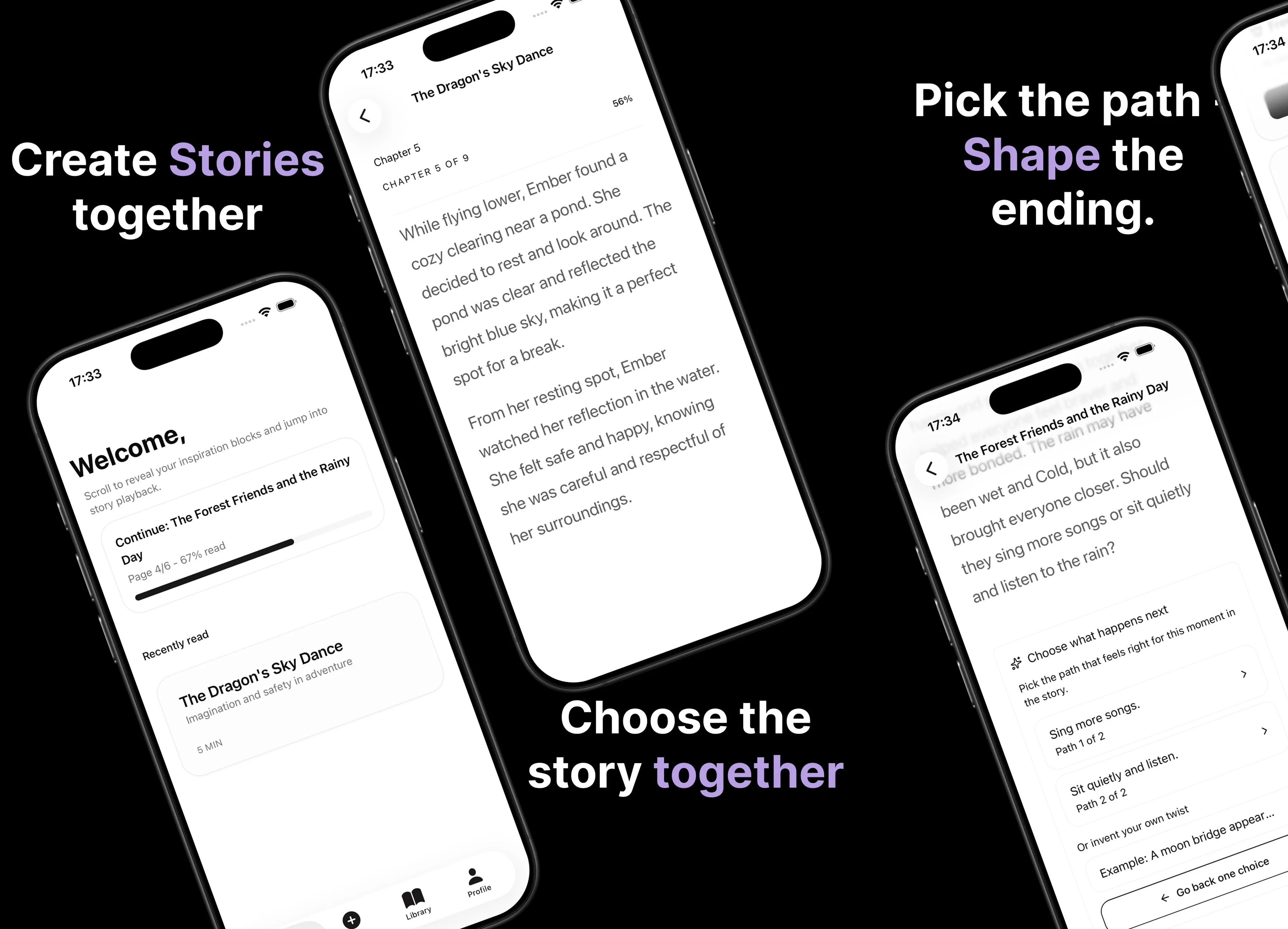
Parent AI Stories: personalized bedtime stories
A mobile product that helps parents create personalized bedtime stories for children in minutes.