Rebuild or Refactor Your MVP? How to Decide
In most cases, do not rebuild your MVP from scratch. Refactor the parts that hurt, replace the worst components one at a time, and keep shipping. A full rebuild is justified only when the foundation itself blocks you: the data model is wrong for the business, the architecture cannot meet a hard requirement, or nearly every change breaks something else and the code cannot be made testable.
That answer disappoints founders who are sure the code is "a mess," and it is still the right default. A rewrite feels clean because you remember the product's problems but not its hidden knowledge: all the edge cases the old code quietly handles. This guide gives you a way to decide with evidence instead of frustration, covering your options, the signals that matter, how to run an incremental replacement, and what to do if the MVP was built with AI tools or no-code.
Your real options
"Rewrite or refactor" is a false binary. There are four realistic paths.
- Extend. Keep building on the current code. Right when the pain is a product gap, not a code problem, and shipping is still reasonably fast.
- Refactor. Improve the structure in place: add tests, remove duplication, clarify boundaries. No new product, no pause in delivery.
- Replace incrementally. Carve out one module or capability, rebuild it cleanly behind a stable interface, switch traffic over, and repeat. Often called the strangler approach.
- Rebuild. Build a new system, migrate data and customers, retire the old one. The highest-risk, highest-cost option, and sometimes the only one that works.
Options 2 and 3 solve most MVP problems. Treat option 4 as the exception that has to earn its place.
Signals that your MVP is truly in trouble
Judge by measurable symptoms, not by how ugly the code looks.
- Delivery has slowed sharply. Features that took days in the first months now take weeks, and the cause is the code, not scope.
- Changes cause unrelated breakage. Fixing one thing breaks another, because modules are tangled and there are no tests to catch it.
- Fear of touching parts of the system. Engineers avoid certain files, and knowledge sits with one person.
- Production incidents are recurring. The same classes of failure keep returning: performance collapses, data inconsistency, outages under moderate load.
- Hiring and onboarding suffer. New engineers take months to become productive, or good candidates decline the stack.
- A business requirement cannot be met. Enterprise customers need tenant isolation, audit logs or compliance that the current design cannot support, for example because tenancy was never designed in. We cover that exact decision in multi-tenant SaaS architecture.
If none of these is true, you probably have untidy code, not a failing system, and untidy code is a refactoring problem.
Signals that you should not rebuild
- The product works and customers are paying, and the main complaint is that engineers dislike the code.
- You cannot clearly list what a rebuild would do differently, or the list is "make it cleaner."
- You have no tests, which means you also have no definition of what the old system does. A rebuild without that definition will drop behavior.
- Your roadmap is full of features customers are waiting for. A rebuild freezes them.
- The same team that produced the debt would write the replacement under the same pressures.
A widely cited warning here comes from Joel Spolsky, who argued years ago that rewriting working software from scratch is among the worst strategic mistakes a software company can make. The tools have changed, but the core reason has not: working code encodes years of learned edge cases, and a rewrite starts that learning from zero.
How to diagnose: a one-week audit
Before choosing a path, spend a few days gathering evidence.
- Measure delivery. How long do typical changes take from start to production? Is it getting worse? How often do releases cause bugs?
- Map the architecture. Draw the main components and the dependencies between them. Where is the coupling worst?
- Check the data model. This is the single most important item. Code can be refactored a piece at a time; a data model that misrepresents the business is far harder to fix, and it is the most common legitimate reason for a rebuild.
- Assess test coverage and deployability. Can you deploy safely and quickly? Can you change code with confidence?
- Review security basics. Authentication, authorization, secrets handling, input validation, dependency vulnerabilities. Prototype-era shortcuts often live here, and these are issues to fix regardless of which path you choose.
- List business constraints. Upcoming deals, compliance needs, expected growth, and the stack you can realistically hire for.
The output should be one page: the three biggest problems, what each costs you in time or risk, and the cheapest fix for each. In many audits the answer to the biggest problem turns out to be local, such as one abstraction that no longer fits, not a reason to discard the whole codebase.
How to refactor and replace without stopping the business
Start with tests around the behavior that matters. Characterization tests that pin down what the system does today (even if the behavior is imperfect) give you the safety net everything else depends on.
Fix the riskiest things first. Security holes, data-loss risks and the parts that cause incidents come before cosmetic cleanup.
Draw boundaries. Introduce clear interfaces between modules so that one can be replaced without touching the rest. Even a simple separation of API, business logic and data access pays off.
Replace one slice at a time. Pick the module causing the most pain, rebuild it behind the interface, run it in parallel or behind a feature flag, move traffic across gradually, then delete the old one. Repeat. At every step the product is working and shippable.
Budget it explicitly. A common approach is to dedicate a fixed share of each cycle to debt, rather than waiting for a perfect "cleanup sprint" that never comes. The right share depends on the severity; the point is that it is planned and protected.
If you do have to rebuild
Sometimes it is the right call, for instance when the data model is fundamentally wrong or the stack cannot meet a hard requirement. If so, reduce the risk deliberately.
- Define parity first. Write down what the new system must do on day one. Without it, scope drifts and the project never ends.
- Freeze the old system's features, but keep it maintained for bugs and security. Customers are still using it.
- Reuse what is already right. The product design, the validated user flows, the domain knowledge and often the front end can survive. The old system also works as a living specification.
- Migrate data early and repeatedly. Data migration is the part that surprises teams. Practice it long before cutover.
- Cut over gradually. Move customers in cohorts, not all at once, and keep a rollback path.
- Timebox and review. If the rebuild cannot be described as a bounded project with checkpoints, it is not ready to start.
- Avoid changing everything at once. Swapping the language, framework, cloud provider and architecture simultaneously trades old debt for new, unproven dependencies. Change only what the diagnosis says must change.
The most common failure mode is the second system that tries to fix every complaint about the first, balloons, and reaches parity far later than planned. Scope discipline matters more than technology choices. If you rebuild, review your stack choices against how to choose a tech stack for your MVP.
MVPs built with AI tools or no-code
An increasing number of products start as a prototype generated by AI coding tools or assembled in a no-code platform. They get to market fast, and they reach this decision point quickly too.
Technical debt in AI-generated code is the same kind of debt, just accumulated faster: duplicated logic, inconsistent naming and patterns, missing tests, and shortcuts around security and error handling. The code is not inherently disposable, and it should be judged by its current state, not its origin. A practical approach:
- Audit before deciding. Pay particular attention to authentication, authorization, secrets in the repository, and whether data access is properly scoped per customer.
- Keep what is good. Often the UI and user flows have been validated by real users and are worth preserving, while the backend core needs to be rebuilt properly.
- Treat the prototype as a specification. It is an executable description of what users want, which is valuable even if the code is not.
- Add review discipline. If the team continues using AI assistants, follow the habits in using AI coding assistants without losing code quality so new code does not repeat the problem.
For no-code products, the trigger is usually a ceiling: permissions, performance, integrations or per-seat pricing the platform cannot support. The trade-offs are laid out in no-code vs custom development for your MVP, and a staged migration, moving one capability at a time to custom code, often beats a full switch.
A quick decision guide
Ask these questions in order:
- Is the product gap bigger than the code problem? If yes, extend and keep building. See from MVP to product-market fit and how to prioritize your roadmap.
- Is the pain concentrated in a few modules? If yes, refactor or replace those modules incrementally.
- Is the data model or core architecture wrong for the business? If yes, plan a staged migration, and rebuild the foundation only if the staged route is not viable.
- Is the system unsafe (security or data integrity)? Fix that now, regardless of everything else.
- Can you define a bounded rebuild with parity criteria, a migration plan and a timebox? If you cannot, do not start one.
Bottom line
Default to improving the system you have. Use evidence (delivery speed, incident patterns, data-model fit, business requirements) to decide, and prefer incremental replacement to a big-bang rewrite. Rebuild only when the foundation blocks the business, and when you do, scope it tightly, migrate in stages and keep the old system alive until the new one has earned the traffic.
If you are weighing this decision for your own product, RMJDG's team can run a short technical audit of your codebase and give you a clear recommendation: extend, refactor, replace in stages, or rebuild, with the reasoning behind it.
Services
Not sure where to start? Tell me what you want the product to do.
Related work
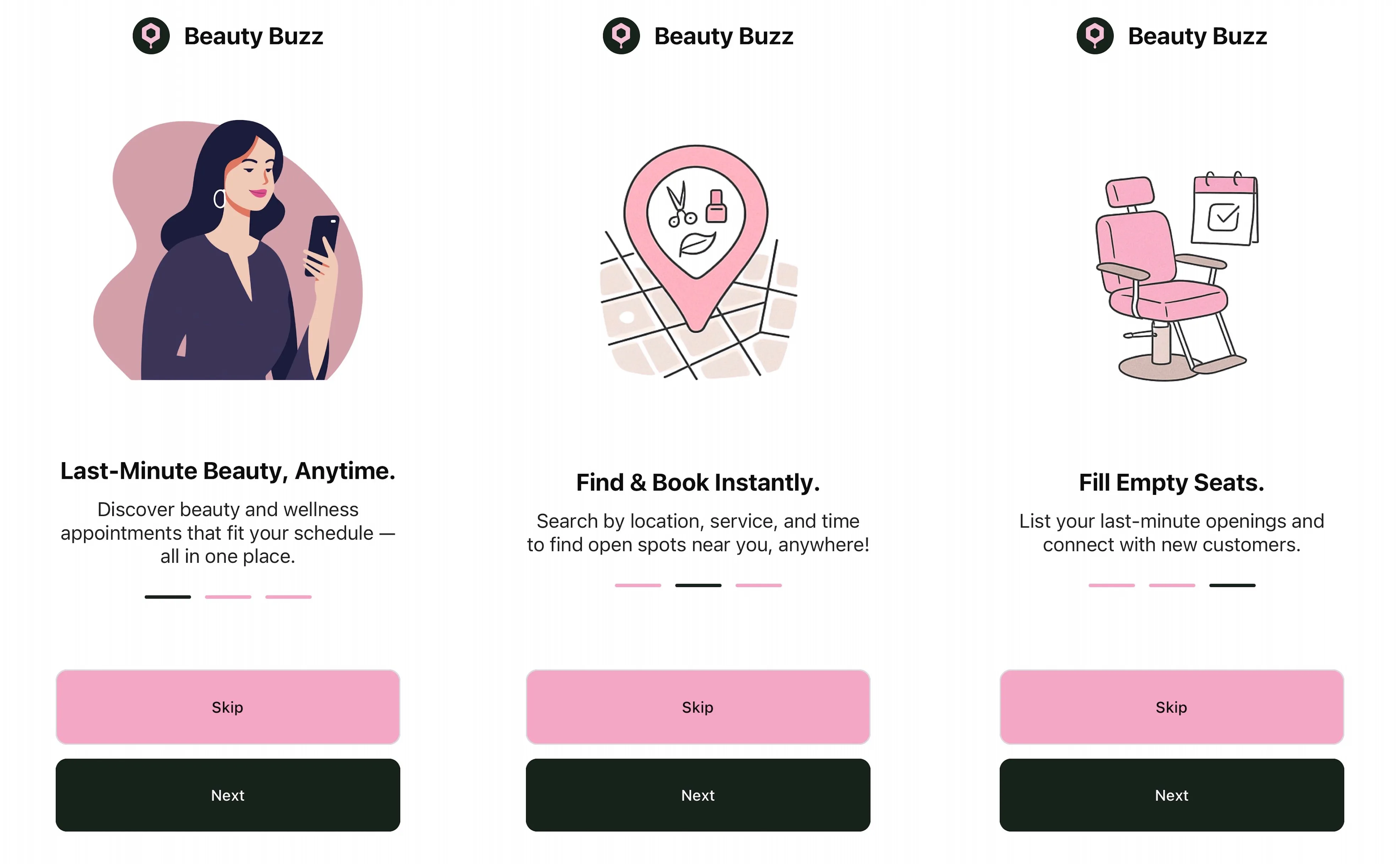
BeautyBuzz: last-minute beauty booking
An iOS beauty booking app for discovering and booking last-minute appointments with beauty professionals.
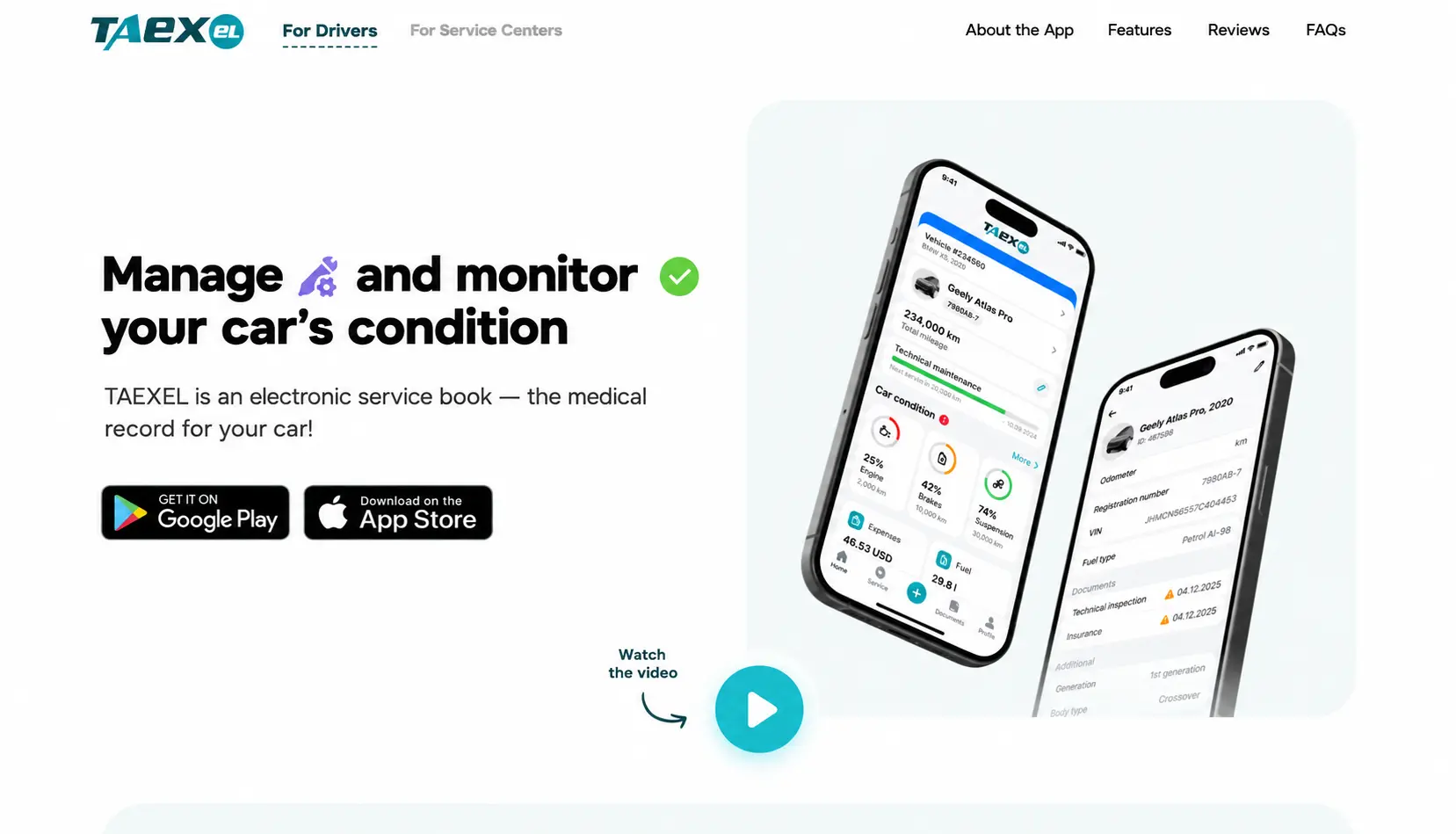
Taexel: a platform for car services and clients
A web platform that helps car services and their clients manage information, discovery, and location-based search.