How Much Does MVP Development Cost in 2026? A Realistic Breakdown
A focused MVP built by a small senior team typically costs somewhere between $15,000 and $40,000. A mid-complexity product with several user roles, payments, and third-party integrations usually lands between $40,000 and $100,000. Anything with multiple platforms, complex workflows, or serious AI features can go past $100,000.
Those are ballpark ranges, not a quote. The real number depends far more on scope than on any hourly rate, and two products that sound similar in a one-line pitch can differ in cost by a factor of three. The rest of this article explains what moves the number, where budgets get blown, and how to keep the cost down without building something too thin to learn from.
MVP cost ranges by complexity
Simple MVP (roughly $15,000-$40,000). One user type, one core workflow, standard authentication, a basic admin view, and one platform (usually web). Examples: a booking tool for a single type of service, a lightweight internal dashboard, a simple marketplace listing flow without payments splitting.
Mid-complexity MVP (roughly $40,000-$100,000). Multiple user roles with permissions, payments or subscriptions, a handful of integrations (CRM, email, calendar, accounting), notifications, and a proper admin panel. Most B2B SaaS MVPs sit here.
Complex MVP ($100,000+). Web plus mobile, real-time features, multi-tenant architecture, heavy data processing, compliance requirements, or AI features that need retrieval, evaluation, and monitoring rather than a single API call.
If your quote falls far outside these ranges, that is not automatically wrong, but you should ask what assumptions sit behind it.
What actually drives MVP cost
Scope: features and user roles
Every user role multiplies work: separate screens, permissions, edge cases, and test paths. An app with customers, providers, and admins is not three times a one-role app, but it is much closer to that than founders expect. The same goes for workflows. "Users can book a session" hides availability rules, cancellations, reminders, time zones, and refunds.
Platforms: web, iOS, Android
Web-only is the cheapest way to reach users. If you need mobile, a cross-platform approach such as React Native with Expo lets one codebase serve both iOS and Android, which is usually cheaper than two native apps. It is not free, though: platform-specific behavior, push notifications, and app store review still take real time.
Design depth
Starting from rough wireframes and a component library is much cheaper than a fully custom design system. For an MVP, clear and usable beats distinctive. Custom brand-level design can wait until you have evidence people want the product.
Integrations
Each third-party service (Stripe, an email provider, a CRM, a calendar API) looks like a small task and rarely is. Webhooks fail, APIs rate-limit, data formats do not match, and sandbox behavior differs from production. Budget for the unhappy paths, not just the demo path.
Backend and data complexity
Multi-tenancy, reporting, audit logs, file uploads, background jobs, and search all add engineering time. A product that mostly stores and displays records is far cheaper than one that transforms, matches, or analyzes them.
AI features
AI changes the cost structure in two ways. There is build cost: prompt design, retrieval, tool calling, guardrails, and evaluation. And there is running cost: LLM API usage that scales with your users. A chat feature that calls a model API is cheap to build. A system that answers from your customers' own documents needs a real production RAG pipeline, and once it is live you will want LLM observability to see cost, latency, and answer quality in production.
Team location and seniority
Rates vary widely by region and experience, but compare total cost, not hourly rates. A senior engineer at a higher rate who builds the right thing once is often cheaper than a junior team that rebuilds it. Ask who will actually do the work, not just who is on the sales call. If you are weighing a solo contractor against a team, the trade-offs are covered in MVP development company vs freelancer.
An illustrative example of how scope adds up
This is a hypothetical product, not a real client project, but it shows how effort accumulates. Imagine a booking SaaS for independent service providers with two user roles (provider and client), card payments, and an admin panel.
- Authentication, accounts, and roles: 1-2 weeks
- Core booking workflow (availability, booking, cancellation): 3-4 weeks
- Payments and payouts: 1-2 weeks
- Notifications (email, reminders): about 1 week
- Admin panel: 1-2 weeks
- UX and UI design: 2 weeks, partly in parallel with development
- Testing, deployment, and launch preparation: 1-2 weeks
That adds up to roughly 10-14 calendar weeks for a small team. Multiply the team-weeks by the team's weekly cost and you have a defensible estimate. Notice that payments and the core workflow, not the login screen, carry most of the risk. If someone quotes you without walking through a breakdown like this, they are guessing.
Costs founders forget
The build quote is not the whole budget.
- Infrastructure and hosting. Cloud services such as AWS are cheap at MVP scale but not free, and costs grow with usage.
- Third-party subscriptions. Email, error tracking, analytics, auth providers, and maps often carry monthly fees.
- App store accounts. Apple's developer program is $99 per year and Google Play has a one-time $25 registration fee, if you ship mobile.
- LLM usage. For AI products, model API costs scale with usage and should be modeled before launch, not after the first invoice.
- Legal basics. Terms of service, a privacy policy, and any data-handling requirements for your market.
- Post-launch fixes and iteration. The first real users will find problems. Reserve budget for bug fixes and the first round of changes.
A reasonable rule: keep a contingency for the work that only becomes visible once real people use the product.
How to reduce MVP cost without building a weak product
Validate before you build. The cheapest feature is the one you never build. Work through validating your MVP idea before writing code and product discovery before development first. Skipping this step is the most expensive shortcut there is.
Ship one core workflow. Identify the single thing users must be able to do for the product to be worth using, and build only that plus what supports it.
Buy instead of build. Use an existing provider for authentication, payments, transactional email, and file storage. Custom versions of these rarely differentiate your product.
Do things manually behind the scenes. If matching, approvals, or reports can be handled by a person for your first 50 users, do that and automate later once you know the process is right.
Start with one platform. Web first, or one cross-platform codebase, not separate native apps.
Delay the custom admin panel. An off-the-shelf admin tool or a simple internal view is usually enough for the first months.
Fix the scope, protect the quality. Cutting features is fine. Cutting tests, error handling, and deployment hygiene creates expensive rework.
Pricing models: what you are actually buying
Fixed price. Predictable for you, but only works if scope is genuinely fixed. Change requests are where the friction starts. Good for well-defined MVPs.
Time and materials. You pay for actual effort. More flexible when requirements will shift, but it requires trust and visibility, so ask for regular demos and a clear burn-down of budget against progress.
Dedicated team. A team works on your product over months. Suited to products past the first MVP where the roadmap keeps evolving.
For a first MVP with a clear scope, a fixed-scope phase followed by time-and-materials iteration is a common and sensible pattern.
Red flags in an MVP quote
- A quote delivered with no questions about users, workflows, or priorities
- No listed assumptions or exclusions
- No mention of testing, deployment, or handover
- A price far below everyone else's with no explanation of what is cut
- Unclear ownership of the code and infrastructure accounts
- No plan for what happens if scope changes mid-project
Good estimates come with a scope document, stated assumptions, and a clear explanation of what is not included.
After the MVP: budget for learning
An MVP is the start of the spend, not the end of it. Once real users arrive, the priority becomes deciding what to build next, which is a different problem covered in what to build after your MVP on the road to product-market fit. Plan your funding so you can afford at least a few iteration cycles after launch, not just the initial build.
Getting a realistic estimate for your product
The most useful thing you can bring to any development partner is a clear description of your users, the one workflow that matters most, and the constraints you cannot change. From that, a good team can give you a scoped estimate with assumptions rather than a single number pulled from the air.
RMJDG builds MVPs and AI-enabled products using TypeScript, React, and Next.js on the front end, Node.js and Python (FastAPI) on the back end, React Native with Expo for mobile, and AWS for deployment. If you have a scope you want pressure-tested, we are happy to walk through it and tell you where the cost and risk actually sit, whether or not we end up building it.
Services
Not sure where to start? Tell me what you want the product to do.
Related work
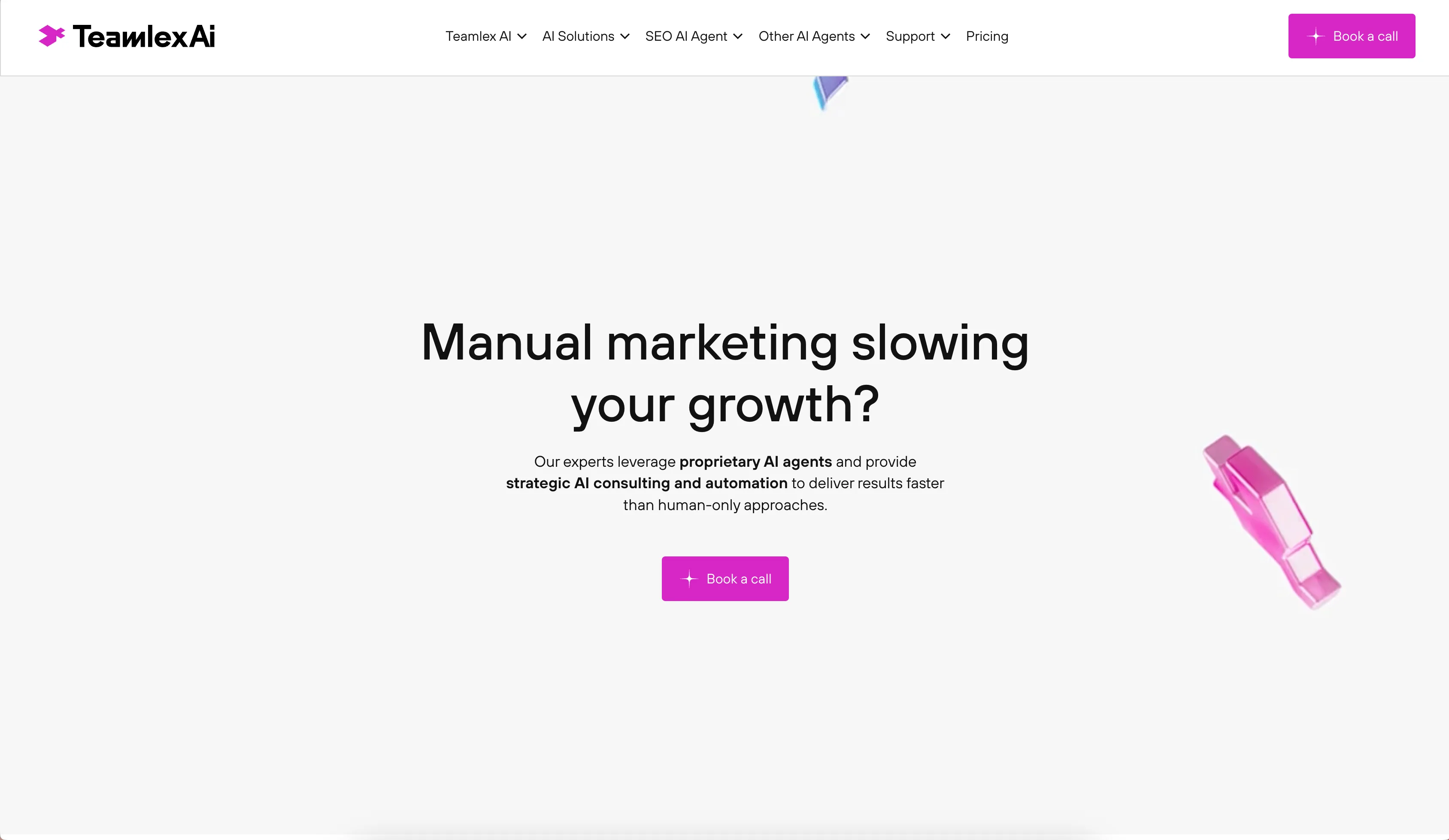
Teamlex AI: an AI SEO platform
An AI SEO platform for understanding search intent, analyzing competitors, and creating optimized content.
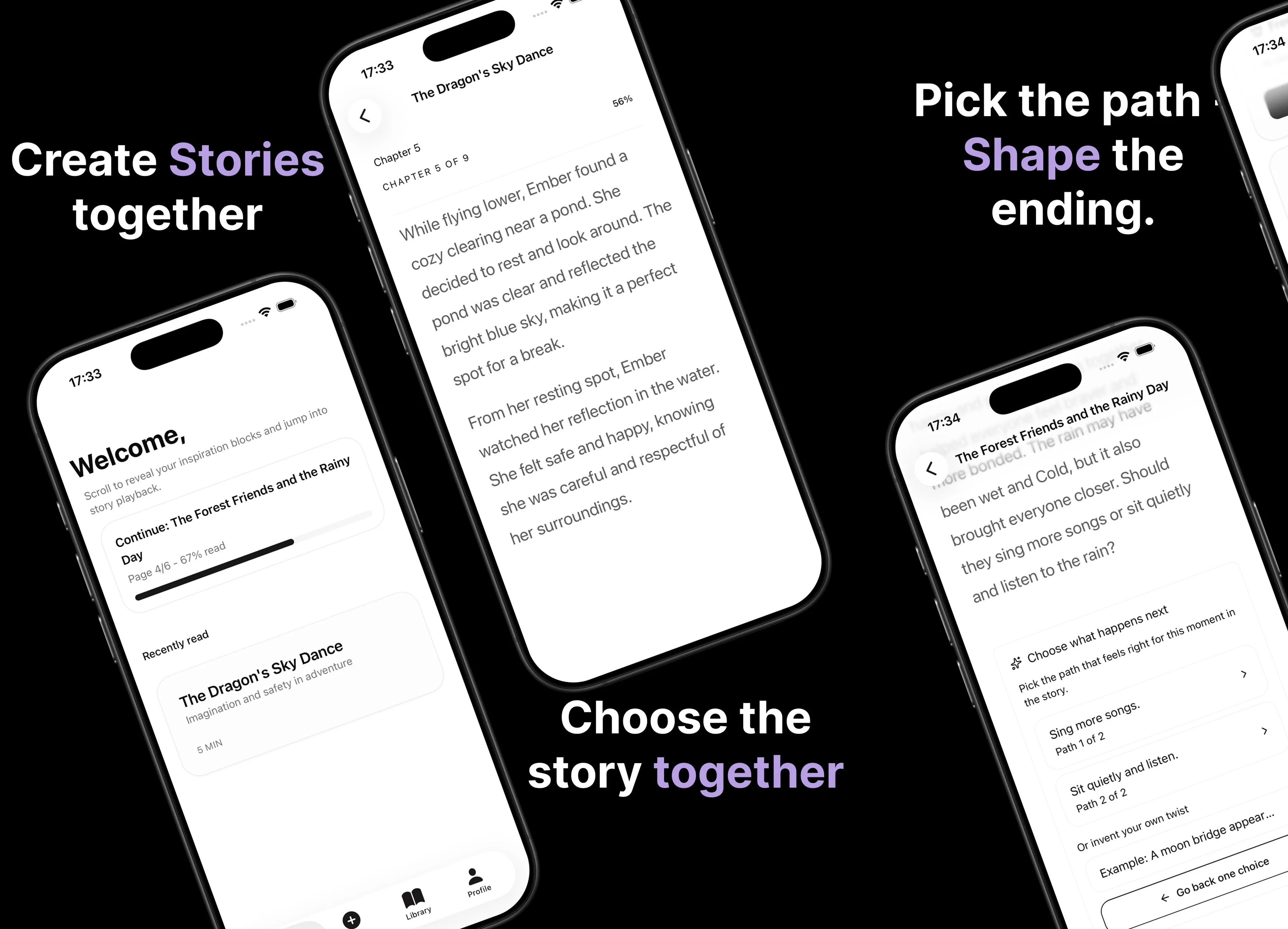
Parent AI Stories: personalized bedtime stories
A mobile product that helps parents create personalized bedtime stories for children in minutes.