How to Test and Evaluate LLM Outputs Before Shipping
Testing an LLM feature before shipping means building a real evaluation set from your own data, scoring outputs against criteria that matter for your task, and re-running that evaluation every time the prompt, model, or retrieval changes. Manual spot-checking catches obvious failures. It misses the slow drift that happens when a prompt tweak improves one case and quietly breaks three others you never thought to check.
This is the step most teams skip under time pressure, and the one that causes the most painful production surprises later.
Why "it looks good" isn't enough
LLM outputs are non-deterministic and the failure modes are subtle. A model can produce a confident, well-formatted, completely wrong answer. It can work perfectly on the five examples in your demo and fail on the sixth pattern you didn't think to try. Unlike traditional software, where a bug either reproduces or it doesn't, LLM quality is a distribution, and eyeballing a handful of outputs tells you almost nothing about that distribution's tail.
The fix isn't more careful manual review. It's a repeatable evaluation process that runs the same way every time, on real examples, against criteria you've actually written down.
Build an evaluation set from real data, not imagined cases
The evaluation set is the foundation everything else depends on, and it needs to reflect what will actually happen in production, not what's easy to write test cases for.
- Pull from real usage where you can. Actual user queries, actual documents, actual support tickets. Synthetic examples miss the messy, ambiguous, oddly phrased inputs real users produce.
- Include the hard cases, not just the easy ones. Ambiguous questions, edge-of-scope requests, adversarial inputs, and cases where the right answer is "I don't know" all belong in the set. A model that only gets tested on clean questions will look better than it is.
- Keep it big enough to be meaningful, small enough to run often. Somewhere in the tens to low hundreds of examples is typical for most features - enough to catch real regressions, small enough to re-run on every change without becoming a chore.
- Update it as you learn. Every real production failure is a candidate for a new evaluation example. This is how the set gets better over time instead of going stale.
Choose the right kind of scoring for the task
Not every output can be scored the same way, and picking the wrong method wastes effort or gives false confidence.
- Exact match or structured validation works for tasks with a defined correct answer: extraction, classification, structured output that must match a schema. Cheap, fast, and reliable when it applies.
- Rubric-based scoring works for open-ended generation: does the answer address the question, is it grounded in the provided context, is the tone right. Write the rubric down explicitly rather than relying on a vague sense of "good."
- LLM-as-judge uses a second model call to score outputs against your rubric, which scales far better than manual review for larger evaluation sets. It's not perfect - judge models have their own biases and blind spots - but it's a reasonable proxy once validated.
- Human review, still, for a sample. Periodically check the LLM judge's scores against actual human judgment on a subset of examples. If they diverge, trust the human and fix the judge prompt.
What to actually measure
Beyond "was the answer correct," a few dimensions matter for most LLM features:
- Groundedness. For RAG or any answer meant to reflect specific source data, does the output actually match what the source says, or does it drift into plausible-sounding invention? This is the single most common failure mode worth explicitly testing for.
- Format compliance. If the output feeds into another system, does it reliably match the expected structure? A 95% compliance rate sounds fine until you realize that's one broken integration call in twenty.
- Refusal and "I don't know" behavior. Does the model correctly decline or flag uncertainty when it should, rather than confidently guessing? This matters more than raw accuracy for a lot of production use cases.
- Consistency. Does the same or a near-identical input produce a similar answer, or does output swing wildly on small input changes? High variance is often invisible in a demo and disruptive in production.
Run the evaluation on every change
The evaluation set only earns its keep if it runs automatically whenever something changes:
- Before shipping a new prompt. Compare scores against the previous version's baseline, not just against an absolute bar.
- Before switching or upgrading a model. A newer or cheaper model can regress specific behaviors even while improving overall benchmarks. See custom AI vs off-the-shelf AI for how this fits into that decision, and how to reduce LLM API costs for why testing before switching models specifically matters for cost changes.
- Before changing retrieval logic, if the feature uses RAG. A change to chunking or reranking can shift which context the model sees in ways that are easy to miss without a systematic check. See building a production RAG pipeline.
- On a schedule, even with no changes, since model providers occasionally update models behind the same API name, which can silently shift behavior.
Connecting evaluation to production monitoring
Evaluation before shipping and observability after shipping are two halves of the same discipline: one tells you whether a change is safe to ship, the other tells you whether production is still behaving the way your evaluation predicted. See LLM observability: what to monitor in production AI systems and how to set up LLM observability for the production side of this.
Common mistakes
- Testing only the happy path. The examples that make a good demo are rarely the examples that reveal real weaknesses.
- No baseline to compare against. A score of "82% pass" means nothing without knowing what the previous version scored.
- Treating evaluation as a one-time setup. An evaluation set built once and never updated stops reflecting how the product and its users have changed.
- Skipping evaluation for agentic features. Multi-step agents need evaluation of the full trajectory, not just the final output, since a wrong tool call early on can still produce a plausible-looking final answer. See how AI agents work and building your first AI agent.
A simple way to start
- Collect 30-50 real examples covering typical cases, edge cases, and cases that should be refused or flagged as uncertain.
- Write a short rubric describing what a correct answer looks like for each type.
- Score your current system's outputs against that rubric to establish a baseline.
- Re-run the same evaluation before any prompt, model, or retrieval change ships.
- Add new examples from real production failures as they happen.
Bottom line
An LLM feature that "seems to work" in testing and a feature that's actually reliable in production are different claims, and the gap between them is exactly what a real evaluation process closes. It doesn't need to be elaborate to be useful - a modest evaluation set, run consistently, catches far more than careful-looking manual review ever will.
If you're shipping an AI feature and want help building an evaluation process around it, RMJDG can set this up alongside the feature itself. You can reach out through the RMJDG site.
Services
Not sure where to start? Tell me what you want the product to do.
Related work
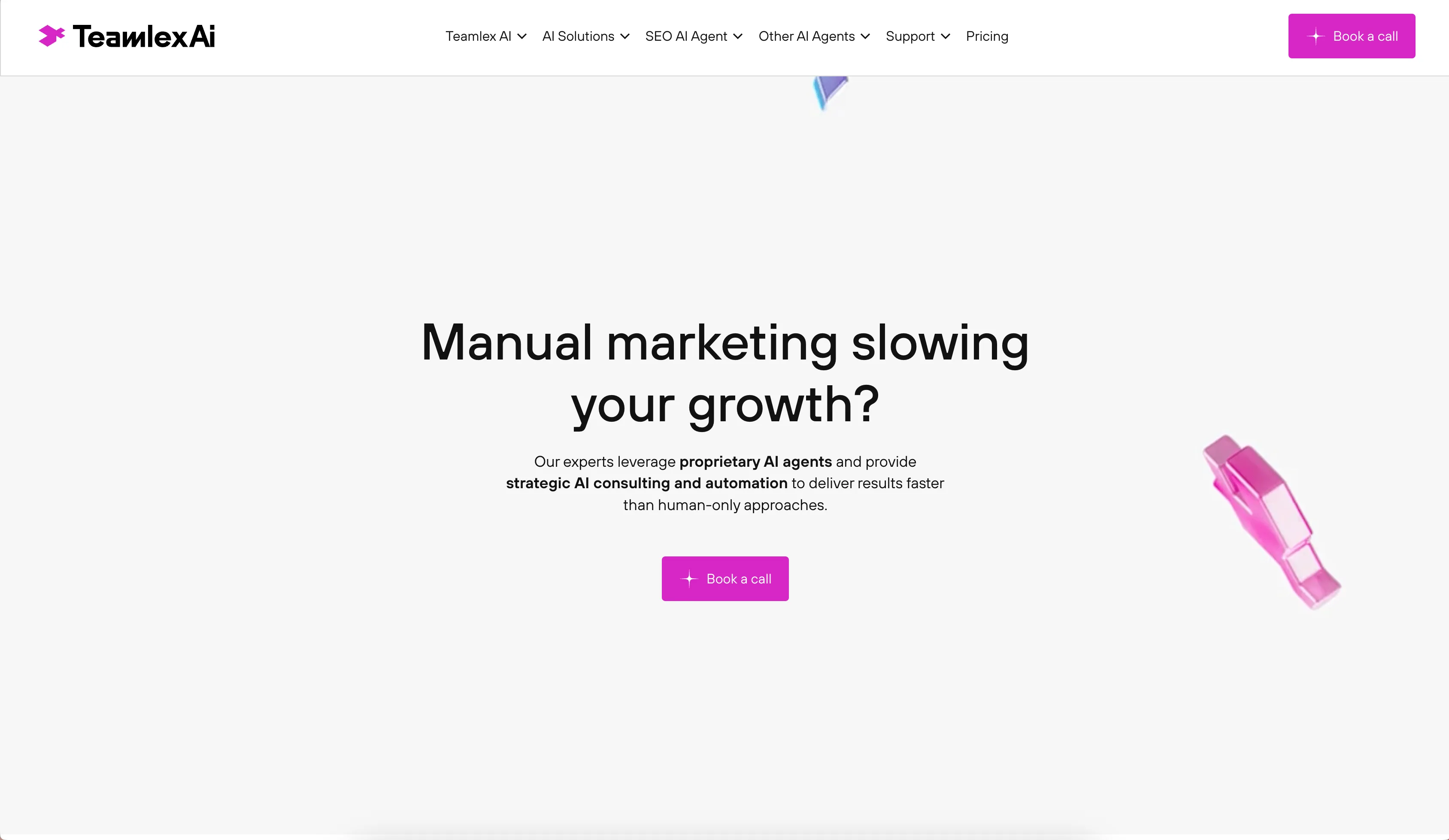
Teamlex AI: an AI SEO platform
An AI SEO platform for understanding search intent, analyzing competitors, and creating optimized content.
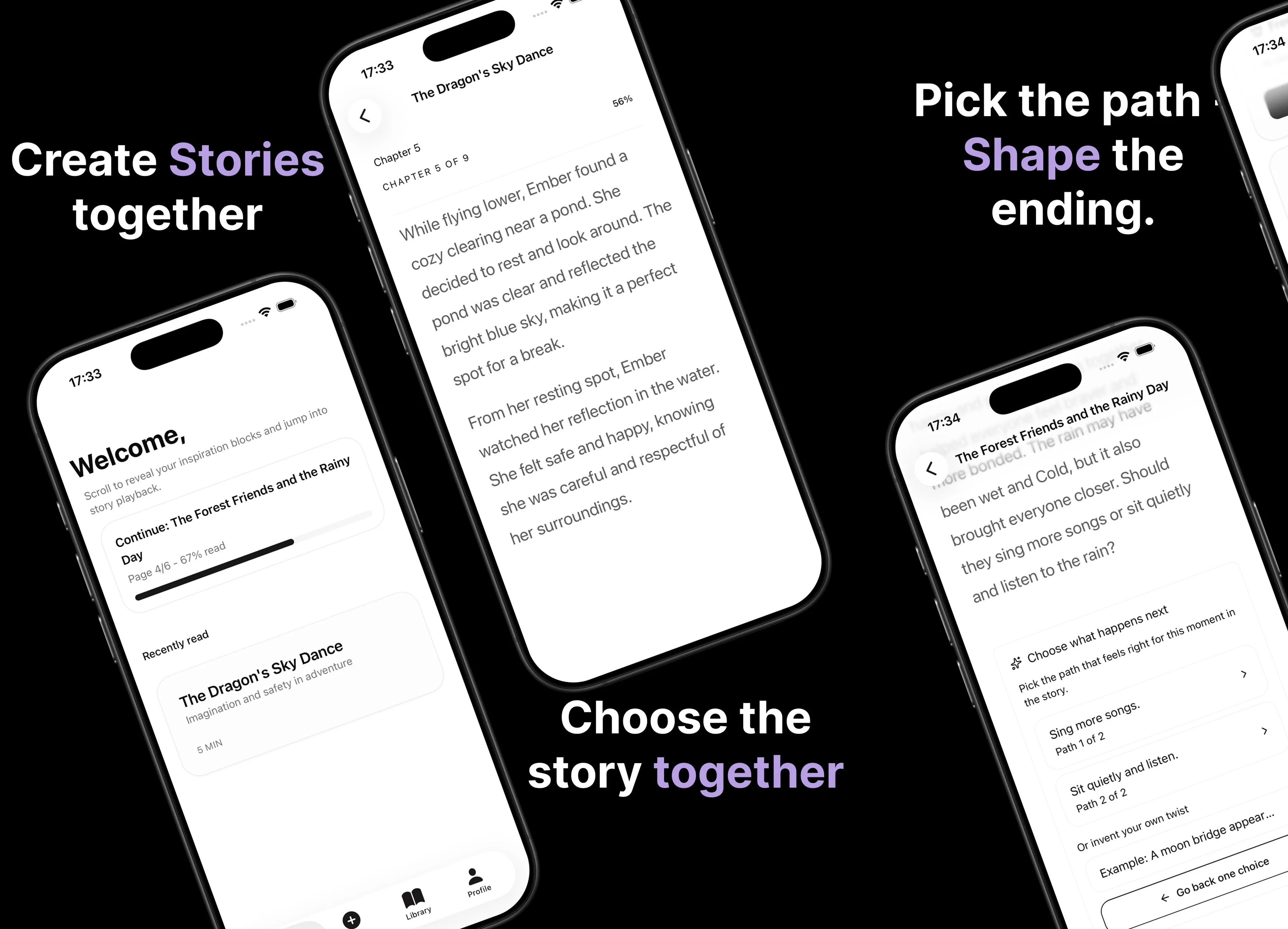
Parent AI Stories: personalized bedtime stories
A mobile product that helps parents create personalized bedtime stories for children in minutes.