RAG vs Fine-Tuning: Which Should You Use for Your AI Product?
Use RAG when the problem is that the model does not know your information. Use fine-tuning when the problem is how the model behaves, such as its format, tone, or consistency on a narrow task. For most business AI products, the answer to "RAG or fine-tuning?" is RAG first, and fine-tuning only after you can prove a behavior gap that prompting and retrieval do not close.
They are not competing versions of the same thing. They fix different failures, and picking the wrong one is how teams spend weeks on a project that does not move the metric they care about.
The core difference: knowledge versus behavior
Retrieval-augmented generation (RAG) looks up relevant information at question time and puts it into the prompt. The model's weights do not change. If you want the mechanics, our explainer on what RAG is and how it works covers the pipeline.
Fine-tuning continues training a model on your examples so its default behavior changes. It is good at teaching patterns: always answer in this structure, use this classification scheme, write in this voice, follow this tool-calling convention.
A useful test is to ask what a wrong answer looks like:
- "It does not know our refund policy" or "it cited last year's pricing" is a knowledge problem. Retrieval fixes it.
- "It knows the answer but formats it wrong, or is inconsistent about which category it picks" is a behavior problem. Better prompts, examples, or fine-tuning might fix it.
When RAG is the right choice
RAG is usually the better fit when:
- Your information changes. Product docs, policies, prices, tickets and contracts change weekly. With RAG you update the index. With fine-tuning you would have to retrain.
- Answers need to be traceable. Retrieval lets you show which documents an answer came from, so users and reviewers can check it.
- Access differs by user. You can filter retrieved documents by what the signed-in user is allowed to see. A fine-tuned model has no such boundary, because whatever it learned can surface for anyone who can query it. For any product with customer data, this alone often decides the question.
- You need to be able to remove information. Deleting a document from an index is simple. Removing something a model has learned is not.
- You want to start quickly. A first RAG system can be running on a hosted model with a document store, and you improve it with evaluation.
RAG has its own failure modes. Poor chunking, weak retrieval and missing reranking cause most bad answers. Our guide to building a production RAG pipeline covers them, and how to choose a vector database helps with the storage layer.
When fine-tuning is the right choice
Fine-tuning earns its cost in narrower situations:
- A stable, repeated task with a clear right answer, such as classifying support tickets into your categories, extracting fields from your document types, or routing requests.
- A strict output style or format that prompting cannot hold reliably across thousands of calls.
- Cost or latency at high volume. A smaller model fine-tuned on one task can sometimes match a larger general model on that task, which lowers the per-call cost. This only pays off at meaningful volume and only if the smaller model passes your evaluation.
- Specialized vocabulary or conventions the base model handles poorly, even when you give it examples in the prompt.
It is a poor choice for teaching a model facts. Fine-tuning changes patterns and style much more reliably than it adds knowledge, and the facts it does absorb can be wrong, outdated and impossible to cite. If the goal is "the model should know our documentation," use retrieval.
Side by side
These are the differences that usually matter in a decision:
- Freshness. RAG: update the index and the change is live. Fine-tuning: retrain, then re-evaluate.
- Traceability. RAG: can point to source documents. Fine-tuning: cannot show where an answer came from.
- Permissions. RAG: filter by user at retrieval time. Fine-tuning: no per-user boundary.
- Upfront effort. RAG: build ingestion, retrieval and evaluation. Fine-tuning: collect and clean good training examples, train, evaluate.
- Running cost. RAG: retrieval infrastructure plus longer prompts. Fine-tuning: possibly cheaper calls on a smaller model, plus the cost of retraining.
- Iteration speed. RAG: change a prompt or retrieval setting and test in minutes. Fine-tuning: each experiment is a training run.
- Dependence on the base model. RAG: easier to switch models. Fine-tuning: tied to the model you trained, so a provider changing or retiring it means redoing the work.
A decision sequence that works
Most teams do better following an order than choosing a side:
- Write a real evaluation set first. Collect 50 to 200 realistic inputs with the answers or behaviors you want. Without this you cannot tell whether anything you try is working. Our guide to testing and evaluating LLM outputs before shipping shows how.
- Improve the prompt. Clear instructions, a few good examples, and a defined output format fix more than people expect.
- Add retrieval if the failures are knowledge failures. Re-run the evaluation. Fix chunking and retrieval before blaming the model.
- Consider fine-tuning only if failures remain and they are behavior failures such as format, consistency or tone, and you have enough high-quality examples to train on.
- Combine them when each has a clear job. A common pattern is RAG for the facts and a fine-tuned model for output structure or classification.
If you cannot get through step 1, you are not ready to fine-tune, because you would have no way to know whether the result is better.
Common misconceptions
"Fine-tuning will teach the model our documents." It can shift style and some patterns, but it is an unreliable way to store facts, and you cannot see or cite what it learned.
"RAG is just search." Retrieval is half of it. The other half is how you chunk content, rank results, and instruct the model to say when the retrieved material does not contain the answer.
"We should fine-tune because our data is proprietary." Proprietary data usually argues for RAG with proper access control, because you keep the data in a system you can secure, audit and update. Sending it into training is a bigger commitment.
"Fine-tuning is cheaper in the long run." Sometimes, at high volume on a narrow task. Include the cost of building the dataset, evaluation, retraining when your needs change, and redoing the work when the base model changes.
Questions to ask before you decide
- Does the model need to know something, or do something in a particular way?
- How often does the underlying information change?
- Do different users have different access rights?
- Do you need to show where an answer came from?
- How many calls will this handle, and does a cheaper model matter at that volume?
- Do you have, or can you create, hundreds of good examples?
If the first answer is "know something," you almost certainly want retrieval. If the answers point to a narrow, high-volume, format-sensitive task, fine-tuning may be worth a trial against your evaluation set.
Where to go from here
If your system answers questions from your own content, build the evaluation set and a solid retrieval layer first. That gives you the baseline every other decision depends on, including whether custom AI or an off-the-shelf model is the right foundation for your product.
If you are shipping AI features inside a SaaS product, retrieval also changes how you think about permissions and tenants, which we cover in adding AI to an existing SaaS product. And if you want other tools and AI assistants to use your product's data directly, see how to build an MCP server for your SaaS product.
If you are unsure which approach fits your use case, a short architecture review against a sample of your real data is usually enough to settle it. That is something our team can help with, and you can decide from the evaluation results rather than from opinion.
Services
Not sure where to start? Tell me what you want the product to do.
Related work
Teamlex AI: an AI SEO platform
An AI SEO platform for understanding search intent, analyzing competitors, and creating optimized content.
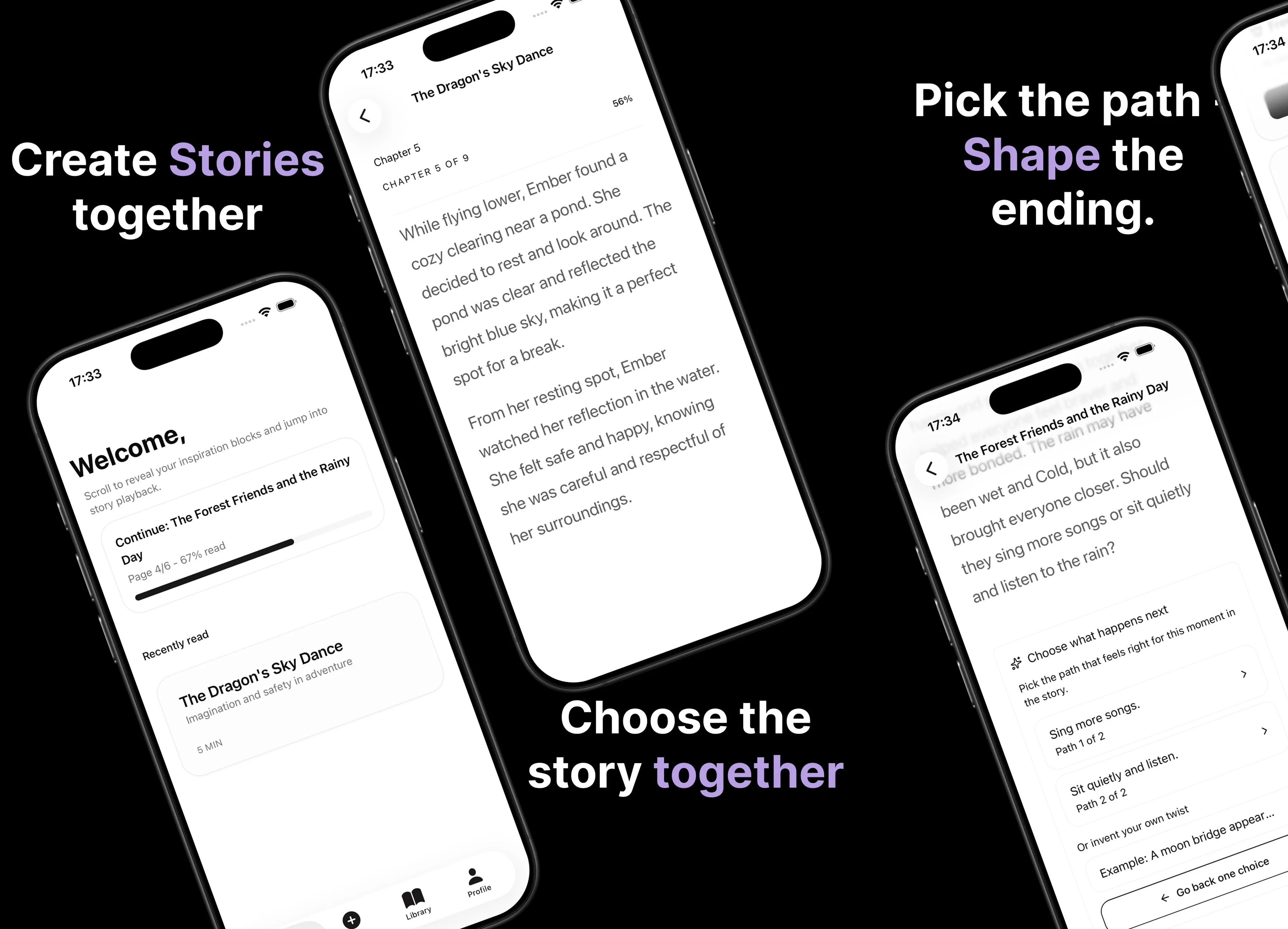
Parent AI Stories: personalized bedtime stories
A mobile product that helps parents create personalized bedtime stories for children in minutes.